Date: 08-Aug-2026 Author: Safalux
Table of Contents
- The Respray Paradox: Why Immediate Protection Can Ruin Your New Paint
- The Science of 'Off-Gassing': Why Fresh Paint Needs to Breathe
- Solvent Evaporation vs. Surface Dry Time
- The Dubai Variable: How the UAE Climate Affects Cure Times
- The Safety Window: Recommended Timelines for Ceramic Application
- Assessing the Quality of Your Respray: A Pre-Coating Checklist
- Professional Preparation: The Necessary Steps After the Wait
- Choosing the Right Nano-Ceramic Formula for Dubai's Environment
- The Professional Application Process in a Controlled Environment
- Caring for Your New Surface: Post-Coating Maintenance in the Desert
- Conclusion: Why Patience is the Best Investment for Your Vehicle's Longevity
- Frequently Asked Questions
Quick answer: After a full respray in Dubai, you should wait a minimum of 30 days before applying ceramic coating to fresh paint—and up to 60 days if the paint was applied thickly or if humidity was high during application. Dubai's extreme heat accelerates surface drying but can trap solvents deeper in the paint, making the wait non-negotiable for a lasting bond.
You've just invested in a full respray. Your BMW looks immaculate. Your Range Rover is gleaming under the Dubai sun. Now the question burning in your mind: Can I get ceramic coating applied right now?
The answer is almost always no—and the reason matters more than you might think.
Ceramic coating after full respray is one of the most misunderstood topics in the UAE detailing scene. Workshop staff give conflicting advice. Online forums are full of shortcuts that lead to expensive mistakes. And Dubai's climate adds a layer of complexity that generic advice simply doesn't account for.
This guide cuts through the noise. Whether you're protecting a freshly painted Porsche in Dubai Marina or a newly resprayed Mercedes in Abu Dhabi, you'll find everything you need to make the right call—backed by science, not guesswork.
The Respray Paradox: Why Immediate Protection Can Ruin Your New Paint
When you finish a full respray, an instinct calls: protect it at once. The paint looks perfect. The color is vivid. Going even one day without turning it in, when subjected to Dubai's merciless conditions, just feels like a crime.
But that instinct, however well-intentioned, can ruin the same finish that you just paid to restore.
Understanding the Urgent Desire for Protection in the UAE
Dubai's environment is genuinely aggressive. During summer months, the UV index readings regularly top 10—rated as "extreme" by the World Health Organization—and ambient temperatures can easily exceed 45 °C. A touch of fine desert sand, some industrial fallout, and then the humidity jumps up near the coast, and these are really conditions that potentially endanger unprotected paintwork.
With this in mind, it is no wonder that Dubai, Abu Dhabi and Sharjah vehicle owners demand to have protection applied as soon as they take their car from the body shop. The urgency is real. The problem is the timing.
The Scientific Risk: Why Rushing the Process Leads to Paint Failure
Unlike simply surface drying, modern automotive refinish paints—polyurethane and waterborne basecoat systems used when painting a car in an actual body shop—cure via a chemical process. This process involves two key events: evaporation of the solvent and cross-linking between polymer chains.
However, surface drying can take place in hours. Complete molecular knotting still requires 30 to 60 days in most cases, and the conditions are typically closest to what they would be at room temperature.
If you put on a ceramic coat before this process has finished, then you effectively trap the issue. Basically, it forms a semi-permeable layer over paint that is in the process of doing its chemical change. The result? Lifting, hazing and streaking of the coating within months – poor adhesion leads to premature delamination.
Trapped Solvents: The Phenomenon of Haze and Delamination
Here's where it gets down to the nitty and gritty. During off-gassing, residual solvents are needed to escape as paint cures. These solvents are not able to escape when a ceramic coating is applied too soon and end up being trapped underneath the coating layer.
The surface you can see is the observable result, which is cloudiness or haze in a clear coat. In more serious instances, it will start to delaminate—in other words, peel away from the paint below in chunks. Fixing this will require a full paint correction, and in some cases even have to re-apply the ceramic coating itself. The costliest blunder, which could have been avoided with patience.
The Science of 'Off-Gassing': Why Fresh Paint Needs to Breathe
Off-gassing is not a detailing myth. It is an established chemical phenomenon in automotive refinishing.
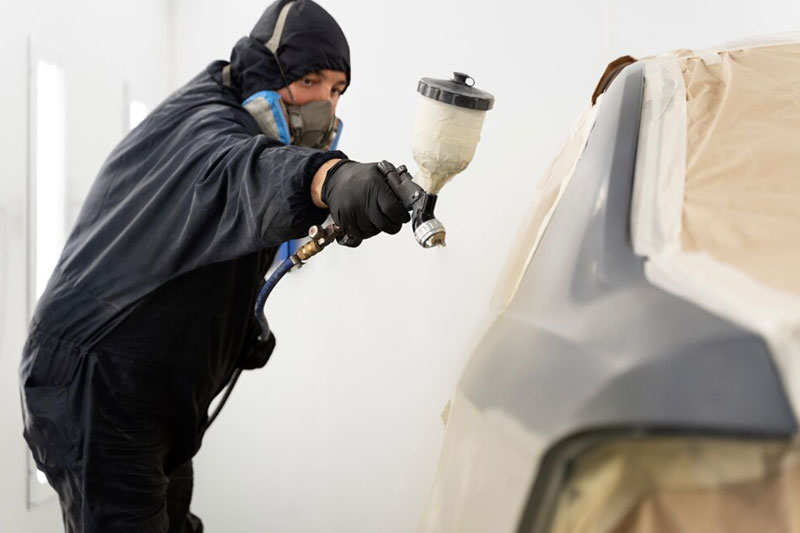
If a body shop is spraying base coat and clear on your car, the products that are used have solvent in them, which are chemical compounds that keep everything liquid while being applied. Those solvents need to migrate to the surface and evaporate away into the air as the paint dries or cures. This is off-gassing.
The full off-gassing period will naturally differ depending on the type of refinish product, number of coats, baking temperature, and, importantly, the ambient environment. The substantial amount of solvent left at the surface can be misleading, as even in Dubai, with its high heat levels causing the surface to skin over quickly, it may appear that the paint is fully cured.
High spots, surface contamination, and unpredictable adhesion failures will develop when a ceramic coating binds over off-gassing paint. Nothing in the world can help you prepare for this window or the quality of the product itself once you skip it.
The Science of 'Off-Gassing': Why Fresh Paint Needs to Breathe
Off-gassing is not a detailing myth. It is an established chemical phenomenon in automotive refinishing.
If a body shop is spraying base coat and clear on your car, the products that are used have solvent in them, which are chemical compounds that keep everything liquid while being applied. Those solvents need to migrate to the surface and evaporate away into the air as the paint dries or cures. This is off-gassing.
The full off-gassing period will naturally differ depending on the type of refinish product, number of coats, baking temperature, and, importantly, the ambient environment. The substantial amount of solvent left at the surface can be misleading, as even in Dubai, with its high heat levels causing the surface to skin over quickly, it may appear that the paint is fully cured.
High spots, surface contamination, and unpredictable adhesion failures will develop when a ceramic coating binds over off-gassing paint. Nothing in the world can help you prepare for this window or the quality of the product itself once you skip it.
Solvent Evaporation vs. Surface Dry Time
Surface dry time vs. Full solvent evaporation. Understanding the difference between surface dry time and full solvent evaporation is a must-know thing for each vehicle owner who replaced another car after repainting (for example, you are an auto dealer).
The Molecular Journey of Automotive Refinish Paints
2 to 4 hours—Surface dry—the point at which paint no longer feels tacky. That's what body shop techs mean when they say "the paint's dry." The paint ain't cured tho!
From a molecular standpoint, cross-linking of the polymer chains in the clear coat is still taking place. Solvents are still migrating outward. Weeks after painting appears to have dried, the paint film remains softer, more porous, and chemically active. The surface is also more susceptible to marring, chemical staining, and environmental etching at this stage in the process.
How Ceramic Coatings Create a 'Breathable' Barrier Conflict
A professional ceramic coating (e.g., Gtechniq Crystal Serum Ultra, XPEL Fusion Plus) chemically adheres to the clear coat on a molecular level and covalently bonds with it. That bond is permanent by definition.
Ask the workshop where the vehicle will be sprayed, how trim will be protected and whether handles, lights or mouldings will be removed when necessary.
The Dubai Variable: How the UAE Climate Affects Cure Times
Standard cure time recommendations are written for temperate climates; think central Europe or the US Midwest, where temperatures consistently range between 15°C and 25°C with moderate humidity. Dubai is neither of these things.
High Heat vs. Intense Humidity: A Double-Edged Sword for Paint
The heat in Dubai is a double-edged sword for fresh paint. High ambient temperatures speed evaporation from the surface, and also potentially hasten early curing activity. Conversely, extreme heat makes the paint surface skin over too soon, and solvent gets trapped deeper, where it takes far longer to migrate out.
Places like Dubai Marina and Jumeirah at the coast occasionally suffer from high humidity — especially from June to September. At locations with high humidity, particularly when mopping solvents are still present, the ambient moisture competes with the outgassing stream to slow solvent evaporation. If a vehicle was repainted in that timeframe, it can take the full 60 days before ceramic coating is able to be applied.
The Impact of Extreme UV Rays on Unprotected Fresh Paint
During this time, your freshly resprayed motor is honestly naked. As such, the UV index in Dubai is usually above 10 during peak hours and can be dangerous to unprotected clear coat. Fresh paint is softer and has less UV resistance than fully cured paint.
Going to the extent of parking at a shaded garage during that waiting time is not merely a precaution either; these are material elements in how enduring the paint cures and just how clear the surface continues to be when it is finally ready for ceramic overlaying. If you don't have access to covered parking, consider a breathable car cover with high-UV resistance.
Dealing with Dust and Sand During the Critical Waiting Period
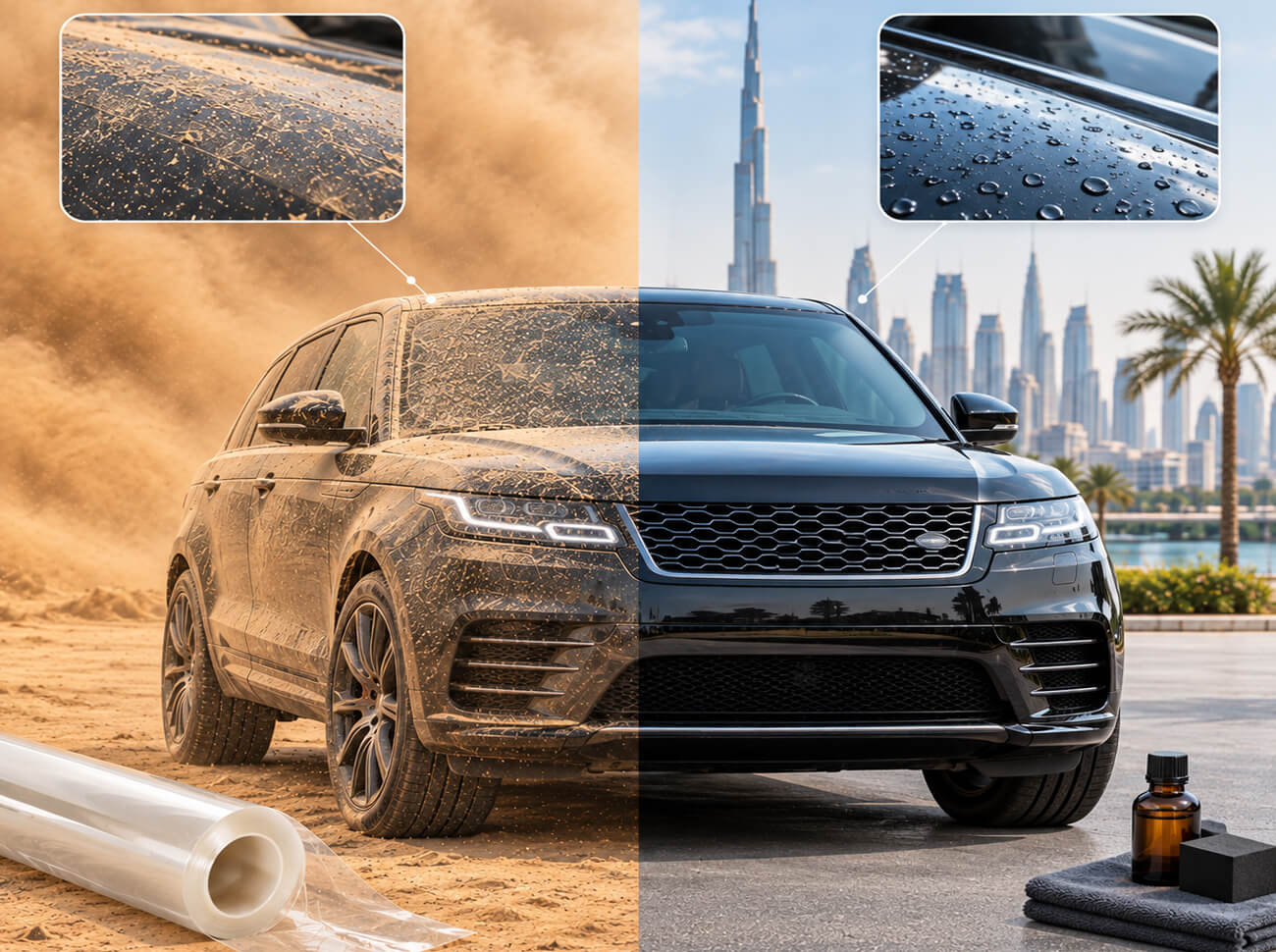
Fine silica sand, which is always in the Arabian Gulf air, is very abrasive at microscopic size. In fact, the paint film in the first 30 to 60 days following a respray is soft enough that airborne particles hitting the surface can embed themselves or cause micro-scratches just from wind blowing across them.
When it has saturated the vehicle, avoid wiping it dry with a cloth during this time. If the car needs washing, perform a light rinse with clean water and blot dry instead of dragging fabric across the surface. Those habits shield the paint at the time it is most susceptible.
The Safety Window: Recommended Timelines for Ceramic Application
The Industry Standard: Why 30 to 60 Days is the 'Golden Rule'
The general rule of thumb among the international professional detailing community is a minimum of 30 days for ceramic coatings after a full respray, and many recommend that 60 days should be considered the golden standard for any vehicle receiving multiple coats or waterborne paint systems.
This 30-to-60-day timeframe allows the clear coat to properly release most all of its solvents and stabilize at the molecular level enough for a ceramic coating to bond appropriately. Within this window—after it has closed—applying a professional ceramic coating like Gtechniq Crystal Serum Ultra or XPEL Fusion Plus grants the coating the stable, chemically inert surface it needs to fully cure.
Dubai detailing studios that promote applying it seconds after a respray are being lazy. There are no shortcuts with the chemistry.
Factors That Shorten the Wait: Infrared (IR) Curing and Bake Booths
Not every body shop is going to turn out the same duration wait. Most of the quality auto beauty stores in Dubai use infrared (IR) curing lamps or bake booths while refinishing. They apply controlled heat to cure automobile paint and substantially speed up the cross-linking and solvent evaporation process.
A high bake in a proper spray booth (30 to 45 minutes at 60°C) immediately after painting offers substantial amounts of curing over room-temperature air-dry. In such cases, selected professional detailers here in the UAE might shorten the waiting time to approximately 21 -30 days, but only after checking the body shop process by conducting paint hardness or gloss readings to indicate a fully cured state.
Factors That Lengthen the Wait: Humidity and Paint Thickness
Two conditions push the waiting period toward the longer end of the range:
High ambient humidity — If the respray occurred during Dubai's humid summer months (June to September), the curing environment was less favorable. Budget for the full 60-day window.
Paint thickness — If the vehicle required multiple layers due to major panel damage, deep colour changes, or structural repairs, solvent content is proportionally higher. More paint means more solvents to evaporate. In these cases, some professional detailers will use a paint thickness gauge to assess coat depth before making a timing recommendation.
Assessing the Quality of Your Respray: A Pre-Coating Checklist
Before any ceramic coating is applied over fresh paint, the surface must be examined meticulously. Getting out of a body shop with paint is not the same as getting out vanity clear first.
Why Your Car Isn't 'Detail-Ready' Directly from the Body Shop
Auto collision repair centers are geared towards delivering quality in the application of paint; they are not looking for how to prep vehicles for ceramic coating application. The goals are different. A job in a body shop isn't technically 'done' until the paint looks smooth and consistent with the rest of the car. A detailing studio needs something that is chemically inert and will have surface contamination or defects at a microscopic level.
These two definitions of "done" are not the same thing.
Identifying 'Body Shop Finish' Defects: Dust Nibs, Pigtails, and Micro-Scratches
Fresh paint from a body shop typically contains several defects that must be corrected before a ceramic coating is applied:
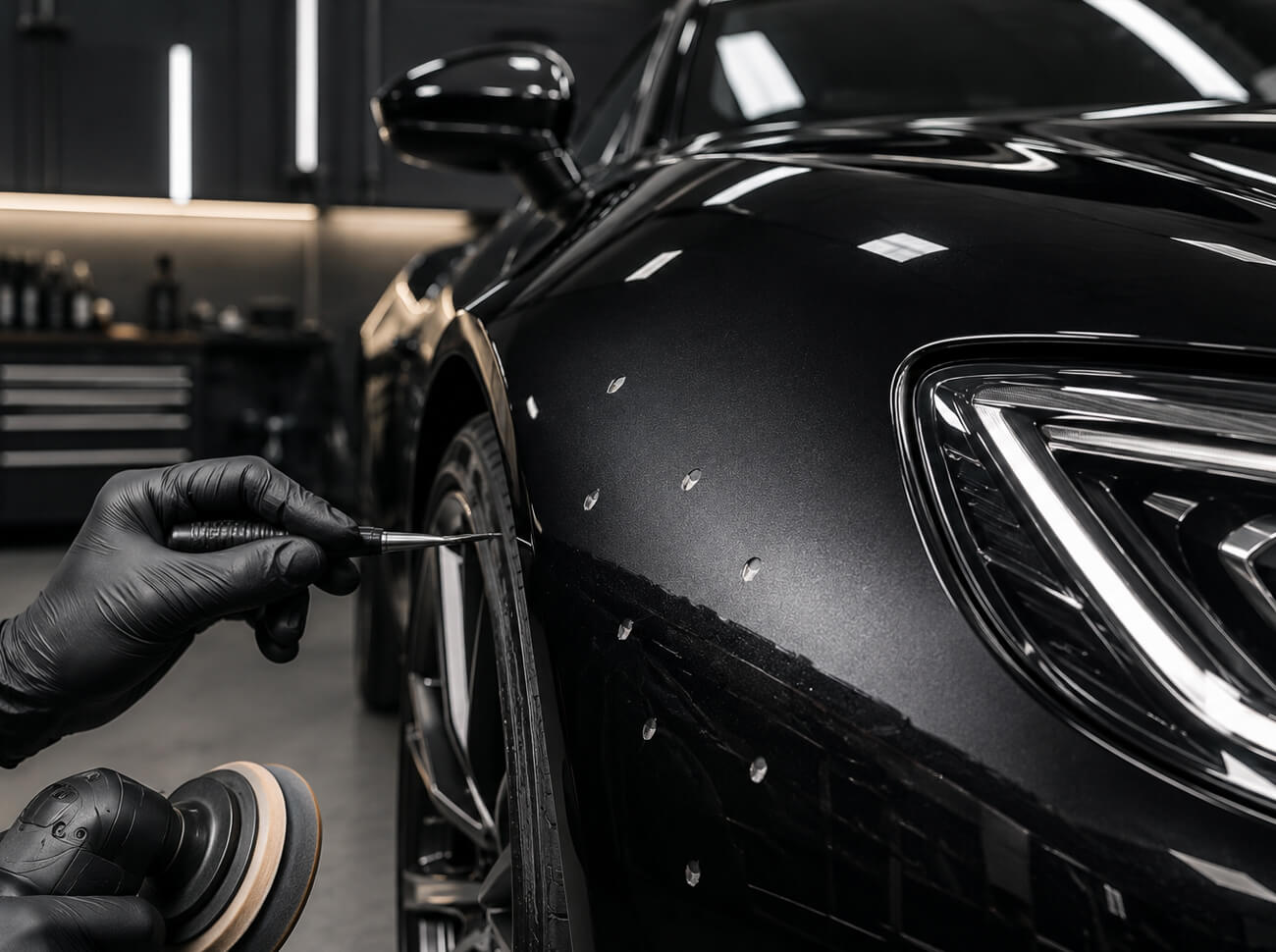
Dust nibs — Tiny particles of airborne dust that settle in the wet paint during application, creating small hard bumps under the clear coat.
Micro-scratches — Fine surface scratches from improper drying or handling during the body shop process.
These defects, if sealed beneath a ceramic coating, become permanent. The coating will lock them in and enhance their visibility under direct light. Paint correction—the process of removing these defects through controlled machine polishing—is not optional. It is a prerequisite.
Measuring Coating Thickness: Ensuring a Stable Foundation for Ceramic
Before even offering paint correction and ceramic coating, a detailer who works out of a professional studio should pull a digital paint thickness gauge (PTG) to measure how much clear coat remains on each panel.
This step serves two purposes. It first establishes that enough clear coat thickness exists to machine polish, without cutting through to the base coat. Second, it detects panels where the body shop might have used thinner coats and those needing special correction (or an alternative method).
Paint thickness measurement is an integral part of our pre-coating assessment at Safalux Auto Care—as even the very best quality ceramic coating is only as good as what’s underneath it.
Professional Preparation: The Necessary Steps After the Wait
The wait is over. The paint has cured. This is the real prep now — and this is where the quality of the output is mostly determined.
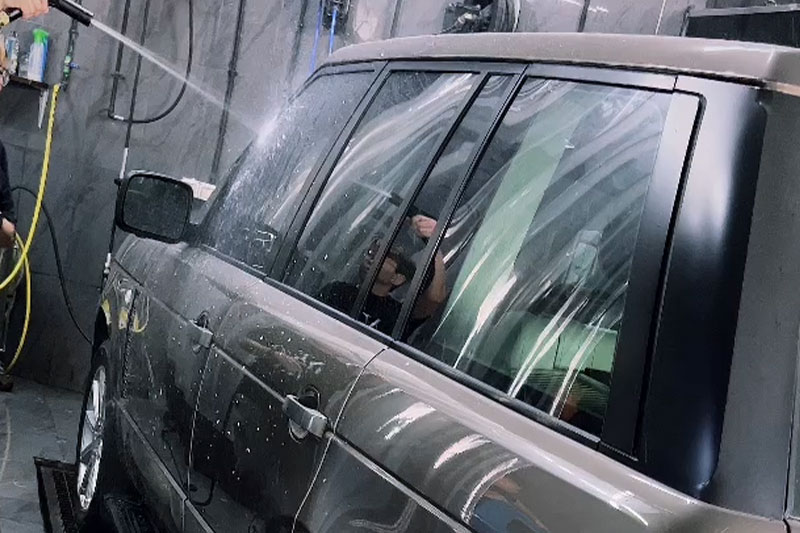
The Critical Decontamination Wash: Removing Industrial Fallout and Rail Dust
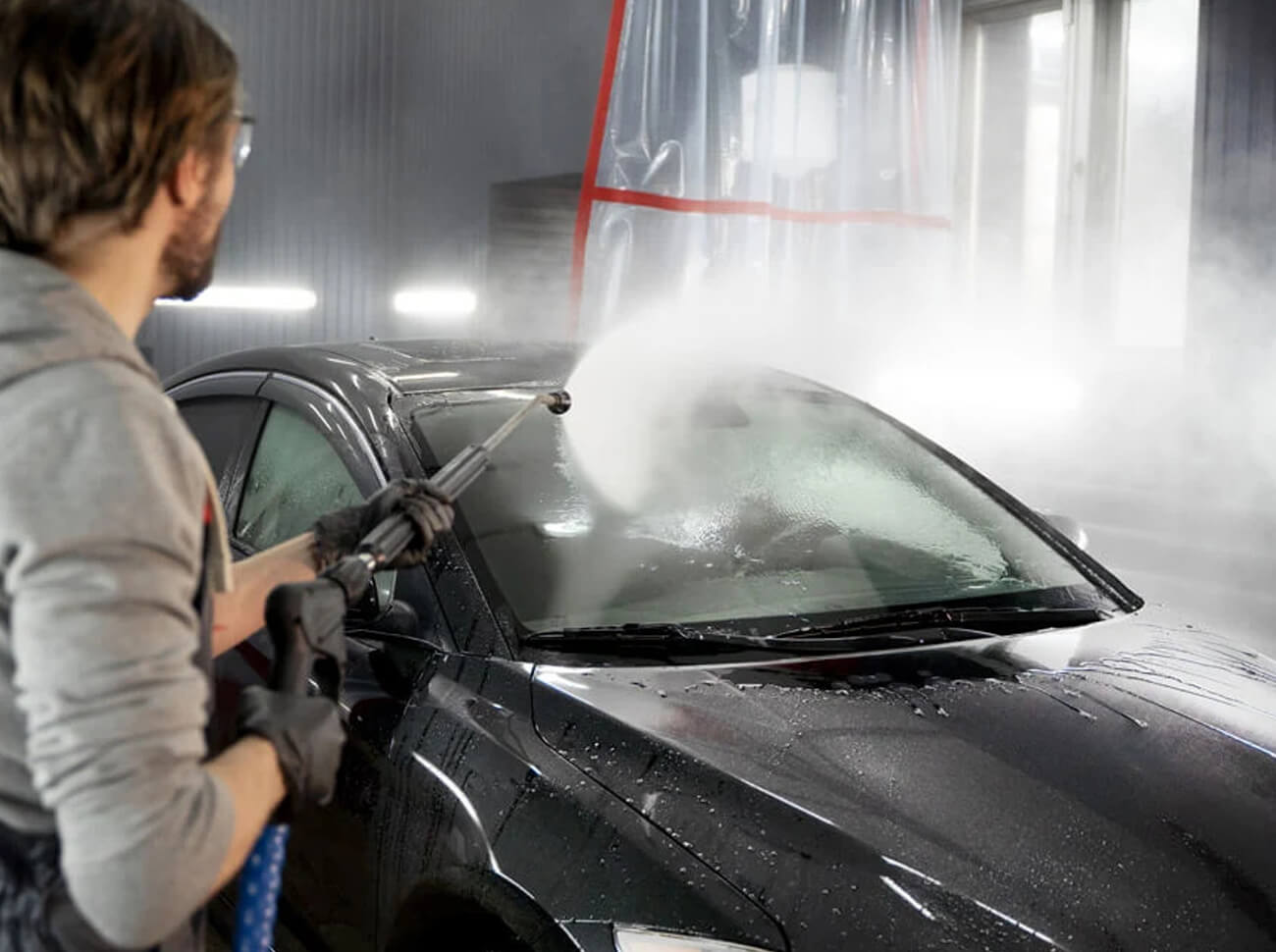
There are iron particles in the air of Dubai, and they come from brake dust delivered by vehicles, industrial waste, and construction work. The particles settle in paint, and untreated cars develop sub-surface rust spots that, over time, can leach through even a ceramic coating.
The full decon wash consists of a gentle pH-neutral pre-wash, an iron fallout remover (it reacts with embedded ferrous particles and turns visibly purple), and the clay bar or mitt to raise contaminants from the surface that washing cannot do absolutely. This is non-negotiable before you machine polish at all.
Why Paint Correction is Mandatory for a Freshly Cured Respray
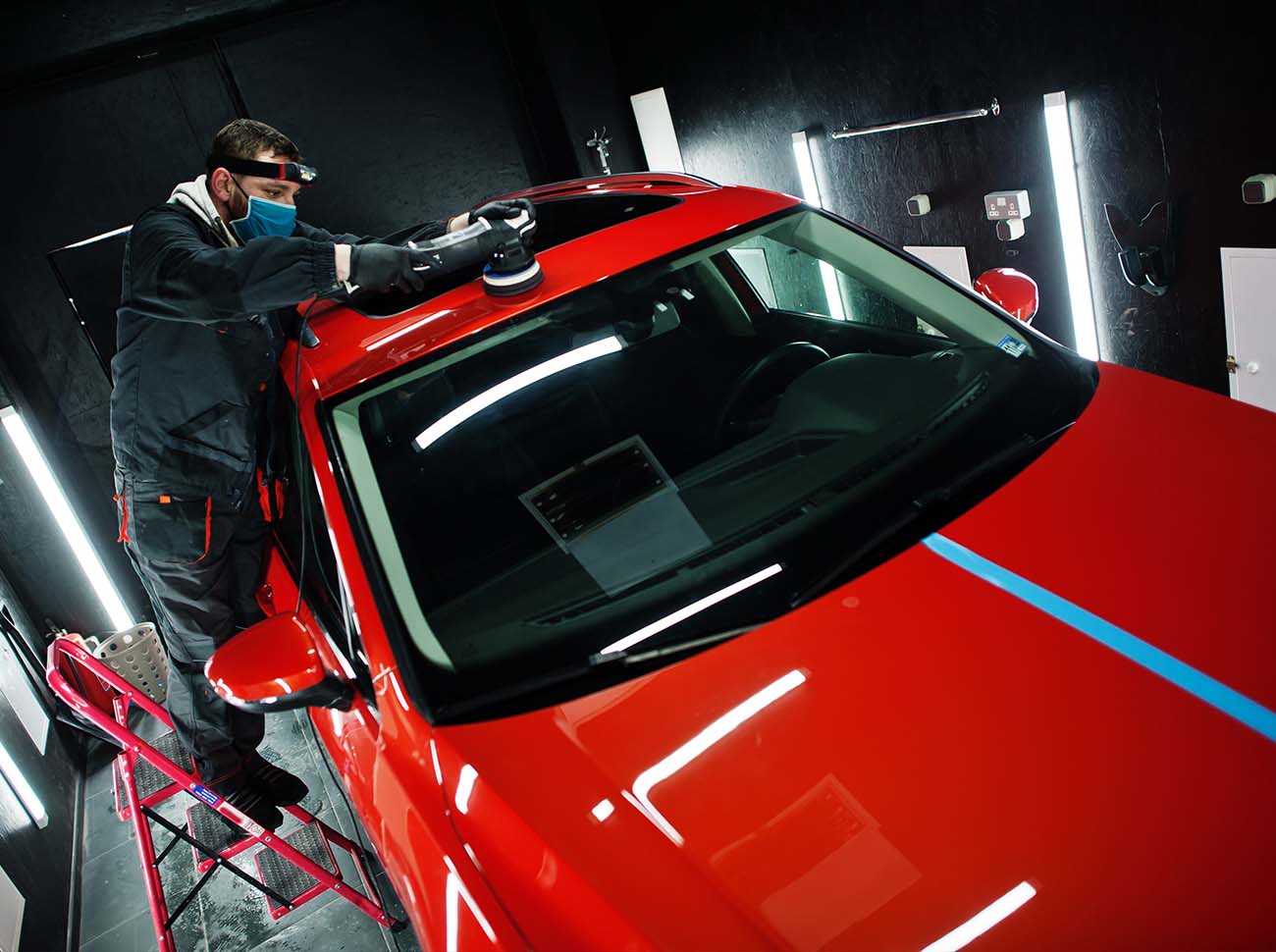
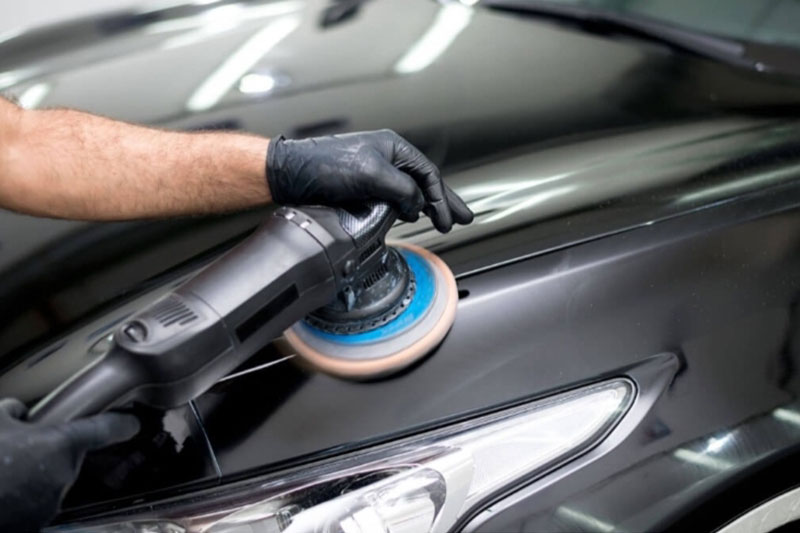
Paint correction — the use of a dual-action or rotary machine polisher with a series of increasingly fine compounds and polishes removes the swirl marks, dust nibs, and micro-scratches left in every body shop finish. The idea is to create a surface with the highest gloss, absolute clarity, and no visible defects under high-intensity lighting.
One of the biggest mistakes is utilizing ceramic coating on fresh paint without first performing proper paint correction, as this is a sure-fire way to waste an amazing product. The coating will reveal whatever coexists on the surface — including every flaw.
Achieving a Molecular-Level Bond: The Importance of a Neutral Surface
When doing paint correction on the surface, you need to use an IPA (isopropyl alcohol) wipe-down or a dedicated panel wipe product after that. This step will strip polishing oil, residual compound, and surface lubricants that would cause ceramic coating not to adhere directly to the clear coat.
This stage in the prep of a panel is what takes ceramic coating from lasting two years to six. Ceramic coatings chemically bond to a correctly prepped surface, not via weak surface adhesion.
Choosing the Right Nano-Ceramic Formula for Dubai's Environment
In Dubai, not all ceramic coatings are equal to the task. In addition to that, not every product is designed to perform in the UAE climate.
High-Temperature Resistance: Essential for Local Performance
Professional ceramic coating in Dubai should resist continuous surface temperatures of above 70°C on semi-exposed metal, and at most, entry-level professional coatings and consumer-grade ceramic sprays are engineered for such conditions. This will cause them to lose hardness and chemical resistance that make ceramic coating desirable as their SiO2 matrix softens at these temperatures.
Professional coatings with a 9H hardness rating and high-temperature SiO2 or SiC (silicon carbide) formulations are the appropriate choice for the UAE. These products maintain structural integrity at temperatures that would degrade standard coatings.
Hydrophobic Performance vs. Sand Abrasion: Finding the Balance
Sand is an eternal abrasive in Dubai. You are optimizing for a coating hydrophobic layer–the top property that enables water to bead and pollutants to slip off instead of a balancing force in opposition to the abrasion resistance. So a very hydrophobic but soft coating will break down more quickly in a sandy desert environment than a harder, slightly less slippery coating.
High-hardness coatings resistant to aggressive chemicals, which offer the best results in Dubai as a base on which we put a faithful maintenance layer aiming at restoring hydrophobicity between pro top-ups.
Comparing Top-Tier Solutions: Gtechniq Crystal Serum Ultra and XPEL Fusion Plus
Gtechniq Crystal Serum Ultra is widely regarded as one of the most durable professional ceramic coatings available. Its dual-layer system—a hard 9H base with a softer 7H top—provides exceptional chemical resistance and scratch resistance simultaneously. The harder inner layer protects against environmental damage while the outer layer is more flexible, reducing the risk of surface cracking in extreme heat cycles.
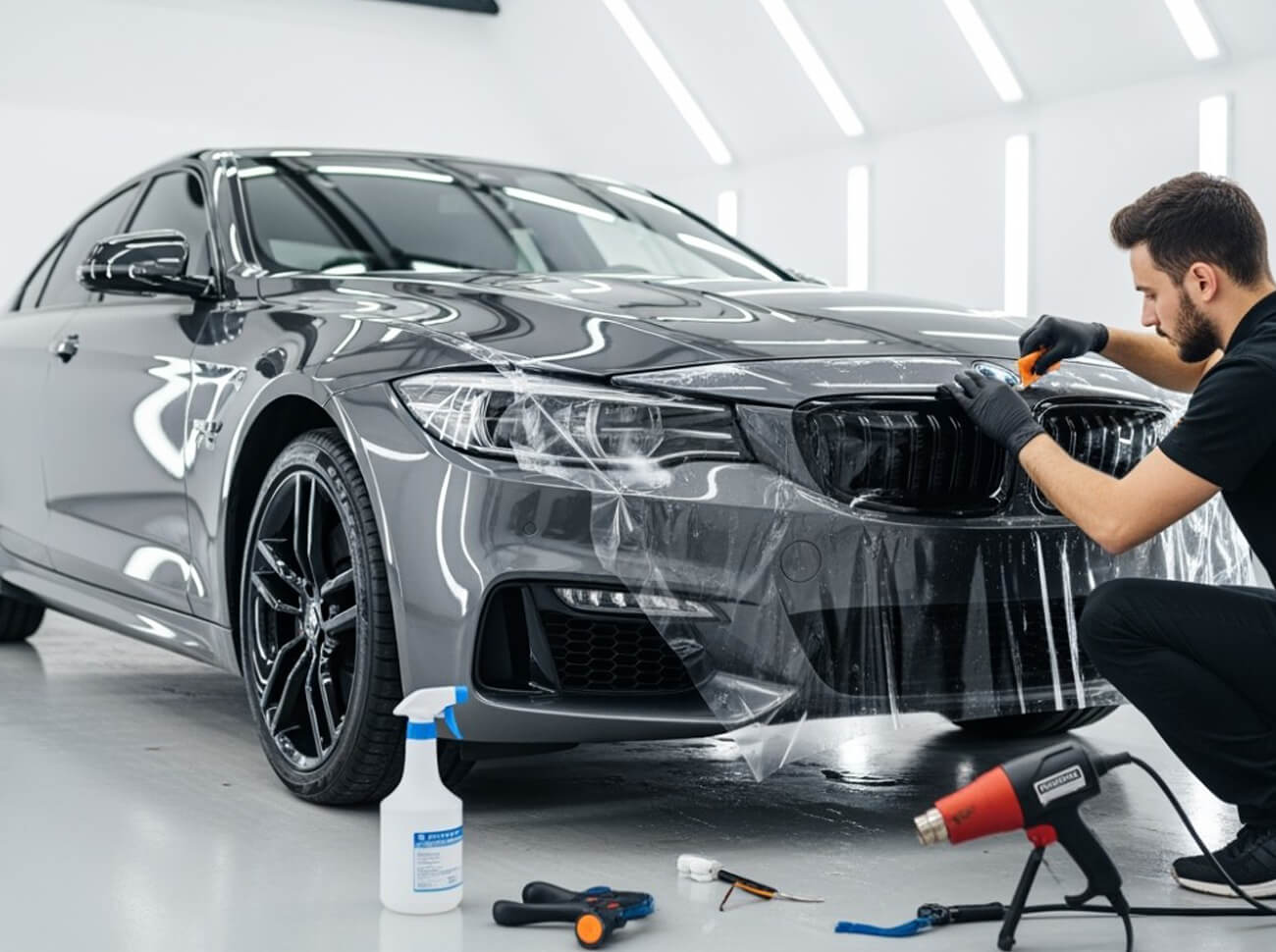
XPEL Fusion Plus is another professional-grade option with strong performance credentials. It offers excellent UV resistance, good hardness, and strong hydrophobic properties. XPEL Fusion Plus is also compatible with XPEL PPF systems, making it a practical choice for vehicles that carry both paint protection film and a ceramic coating.
Both products require professional application in a controlled environment. Neither is suitable for self-application, and both carry warranties that are voided without certified installer involvement.
The Professional Application Process in a Controlled Environment
The environment in which a ceramic coating is applied is as important as the product itself. This is especially true in Dubai, where ambient conditions can sabotage even the best preparation.
Why a Temperature-Controlled Studio is Non-Negotiable in Dubai
Ceramic coatings have to be applied in a small temperature and humidity range too – usually from 15C° to 25C° and relative humidity lower than 70%. So many outdoor conditions in Dubai are often outside this range.
Applying a ceramic coating in extreme heat, dust, or humidity creates high spots (where the coating cures before leveling), surface contamination, and uneven film thickness. In a studio with proper climate control, all of this goes away. Any ceramic coating studio in Dubai without temperature-controlled facilities is sacrificing the quality of the outcome.
The Role of UV Lamps in Post-Application Curing
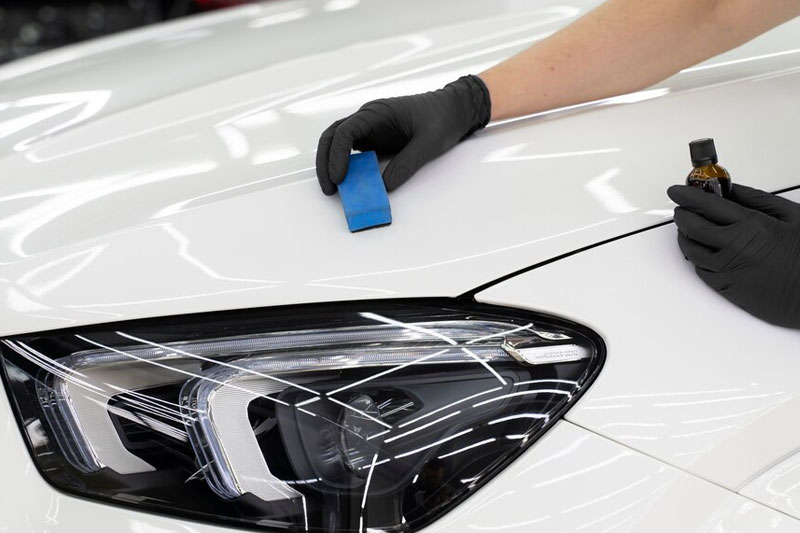
In professional studios, the initial curing phase of the ceramic coating is accelerated with the use of UV lamps or infrared heat lamps after application. This aids the coating in attaining its initial hardness and hence minimizes any chances of damage in the active first 24 to 48 hours.
These, however, are not a replacement for the full curing time—pro coatings take another 7 to 14 days to fully harden—but it does speed up the process at least in this area since vehicles generally need to hit the road quicker.
Ensuring Long-Term Durability Through Precision Installation
Proper ceramic coating installation is done panel-by-panel with the same level of leveling time for each car panel. In Dubai's temperatures, even when working in a studio, if you work too slowly or too quickly, it leaves inconsistency with the application.
Seasoned, certified installers are well aware that the working times are adjusted to other factors such as what kind of product is being laid down, the size of the panel, and also studio climate. That's the knowledge gap between a coating that lasts 2–3 years and one that holds up for five or better.
Caring for Your New Surface: Post-Coating Maintenance in the Desert
A properly applied ceramic coating on fresh paint is only the beginning. How you maintain it determines how long it performs.
The First 7 Days: Critical Rules for Your Newly Coated Respray
The first seven days after ceramic coating application are critical. During this period:
- Avoid all water contact for the first 24 to 48 hours, or as directed by your installer.
- Do not wash the vehicle for the first 7 days.
- Avoid parking under trees where bird droppings, sap, or leaf debris can land on the curing surface.
- Keep the vehicle out of rain where possible—water on an incompletely cured coating can leave permanent marks.
- Avoid automatic car washes entirely. The brushes and high-pH chemicals used in standard car washes will degrade the coating from day one.
High-pH Foam Washes vs. Safe Maintenance: Protecting the Hydrophobic Layer
Improper washing is the single biggest reason for premature ceramic coating failure in Dubai. High alkaline (high pH) foams and extremely powerful traffic film removers—that you frequently find in petrol station car washes throughout the UAE—will, however, remove this hydrophobic layer from coating surfaces with repeated use.
A pH-neutral car shampoo (pH 6 to 8) is used with a proper wash mitt, rinsing carefully and then drying contactless or with very gentle steps. That means a professional ceramic coating maintenance detail—essentially light decontamination and a refreshment of the SiO2 spray topper once every six months—is also required, to keep hydrophobic performance up and augment the life of that underlying layer by substantial amounts.
Avoiding Water Spots: The Danger of Hard Water in the UAE Heat
Learn a little-known Dubai fact: mains water supply is heavily mineralised. As water evaporates on a hot surface—which, in the summertime, happens within seconds—it deposits calcium and magnesium deposits that etch into the coating surface after years of exposure.
The answer is straightforward: do not allow water to air-dry on your ceramic-coated vehicle. Dry immediately afterwards with a clean microfibre drying towel or forced-air blower. In the event of rain, quickly rinse your vehicle with filtered or deionized water and dry as quickly as possible.
Why Patience is the Best Investment for Your Vehicle's Longevity
A full respray followed by a ceramic coat (applied only after a proper wait time, a properly prepared surface, and installation performed correctly) gives you years of paint protection in probably one of the world's harshest auto climates.
Done incorrectly, it locks in problems and shortens the life of your investment.
The 30-to-60-day wait is no complication. It is the base of a result that stands tall when faced against Dubai's UV, sandstorms, and extreme temperatures. Each of the steps in this guide—from off-gassing to paint correction to climate-controlled application—exists because ceramic coating on fresh paint rewards precision, punishes impatience.
Your vehicle deserves the full process. So does your investment.
Ready to protect your freshly resprayed vehicle the right way? The team at Safalux Auto Care in Dubai specializes in ceramic coating after full respray, with certified installation, professional-grade products, and the expertise to handle every vehicle from BMW to Range Rover. Book your ceramic coating consultation today.
Ready to Give Your Car the Care It Deserves?
At Safalux Auto Care, we've spent over 15 years keeping Dubai's cars running at their best. Our expert technicians follow every one of these car maintenance tips using genuine parts, honest pricing, and zero pushy upsells- just trustworthy service you can count on.
Whether you need a quick oil change, a full inspection, or help decoding a mystery warning light, we've got you covered.
Book your service today at 𝐒𝐚𝐟𝐚𝐋𝐮𝐱 𝐀𝐮𝐭𝐨 𝐂𝐚𝐫𝐞 and drive with total peace of mind! Your car deserves it, and so do you.
Recent Posts